How to Create a Social Media Content Strategy: A Step-by-Step Guide for Beginners in 2026:-
- April 1, 2026
- Uncategorized
Introduction:-
In 2026 social media content strategy is not for fun. It has become a tool for businesses, creators and professionals. If you want to grow you need more than just random posting. You need a social media content plan.
Many people make the mistake of posting without planning. They create content Strategy without knowing their goal, audience or message. As a result they do not see growth, engagement or results.
A content plan helps you stay focused and consistent. It gives direction to your content. Helps you connect with your audience in a better way.
In this blog you will learn how to create a social media content plan step by step. This guide will help you plan your content grow your audience and achieve your goals.
What is a Social Media Content Strategy Plan?
A social media content plan is a plan that defines what type of content you will create. It also defines who your audience is and how you will achieve your goals through content.
It includes your content ideas posting schedule and performance tracking.
A good plan helps you create content instead of random posts.
Why You Need a Content Plan
Without a plan your efforts may go in the direction. You may spend time creating content. Not get results.
A content plan helps you:
Stay consistent
Save time
Improve quality
Reach the right audience
Achieve your goals
It also helps you measure your progress and improve over time.

Step 1: Define Your Goal
Know What You Want to Achieve
Before creating content you must decide your goal. Your goal can be:
Increase followers
Generate leads
Build brand awareness
Increase engagement
Drive website traffic
Keep Your Goal Clear
Don’t try to do everything at. Focus on one goal. This helps you create content for your social media.
Step 2: Understand Your Target Audience
Who's Your Audience?
You need to know who you are creating content for. Think about:
Age group
Interests
Problems
Behavior
When you understand your audience you create content that connects with them on media.
Step 3: Choose the Right Platform
Not Every Platform is Needed
Each platform has an audience and content style. Popular platforms include:
Instagram for visuals and reels
Facebook for community building
LinkedIn for content
YouTube for videos
Focus on One or Two Platforms
As a beginner focus on platforms where your audience's active on social media.
Step 4: Decide Your Content Pillars
What are Content Pillars?
Content pillars are topics you will focus on for your social media content.
Example of Content Pillars
If you are in marketing your pillars can be:
Educational content
. Tricks
Case studies
Personal experiences
Content pillars keep your content organized and consistent on media.
Step 5: Plan Your Content Types
Types of Content You Can Create
Posts
. Short videos
Stories
Carousels
Live sessions
Mix Different Formats
Using formats keeps your audience interested and engaged on social media.
Step 6: Create a Content Calendar
What's a Content Calendar?
A content calendar is a plan of what you will post and when.
How to Create It
Decide posting days
Plan content topics
Assign content formats
Example Weekly Plan
Monday: post
Wednesday: Reel
Friday: Tips post
Sunday: Personal content
A calendar helps you stay organized with your social media content.
Step 7: Create High-Quality Content
Focus on Value
Your content should help, inform or entertain your audience on media.
Keep It
Use simple language and clear visuals for your social media posts.
Be Authentic
Show your personality on social media. People connect with content.
Step 8: Write Engaging Captions
Keep It Clear
Write captions in easy language for your social media posts.
Add a Purpose
Your caption should:
Teach something
Ask a question
Encourage action
Example CTA
Comment your thoughts
Save this post
Share with friends
Captions increase engagement on media.
Step 9: Use Hashtags and Keywords
Why They Matter
Hashtags help your content reach people on social media.
Tips
Use hashtags
Avoid too many hashtags
Mix popular and niche tags
This improves visibility on media.
Step 10: Post
Importance of Consistency
Posting regularly helps you grow faster on social media.
Simple Schedule
3–4 posts per week
Daily stories
1–2 reels
Consistency builds trust and visibility on media.
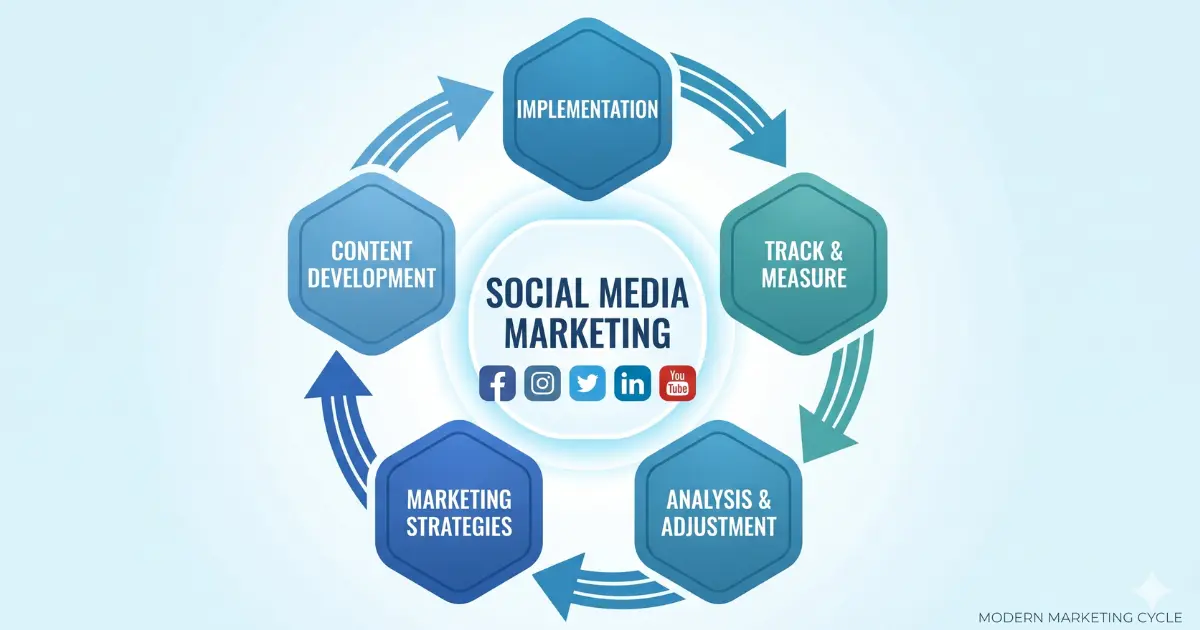
Step 11: Engage with Your Audience
Reply to Comments
Always respond to comments and messages on media.
Build Relationships
Engage with your audience and other creators on media.
This increases your reach and connection on media.
Step 12: Analyze Your Performance
Track Your Results
Check:
Likes
Comments
Shares
Reach
Improve Your Strategy
Focus on what works and improve areas on social media marketing.
Common Mistakes to Avoid

beginners make these mistakes:
Posting without a plan
Ignoring audience needs
Being inconsistent
Copying others
Not analyzing performance
Avoid these mistakes for growth on social media.
Simple Weekly Content Plan
Tips for Long-Term Success
Be patient
Stay consistent
Keep learning
Experiment with content
Focus on quality
Success takes time and effort on media.
Future of Social Media Content Strategy
In 2026 and beyond:
Video content will dominate
AI tools will support content creation
Personal branding will grow
Authentic content will perform
Stay updated with trends to grow faster on social media.
Creating a social media content plan is very important for growth in 2026. It helps you stay organized, consistent and focused.
Start by defining your goal and understanding your audience. Choose the platform plan your content and create valuable posts.
Stay consistent engage with your audience and analyze your performance regularly on media.
You don’t need to be perfect. Just start, learn and improve step, by step.
If you follow this strategy you can build a social media presence and achieve your goals.
About us and this blog
We are a digital marketing company with a focus on helping our customers achieve great results across several key areas.
Request a free quote
We offer professional SEO services that help websites increase their organic search score drastically in order to compete for the highest rankings even when it comes to highly competitive keywords.
Subscribe to our newsletter!
More from our blog
See all posts